
Stamped Concrete Steps
Steps Built for Function and Visual Cohesion
Stamped concrete steps in Goffstown for outdoor access points that need both structural durability and a finished, coordinated appearance
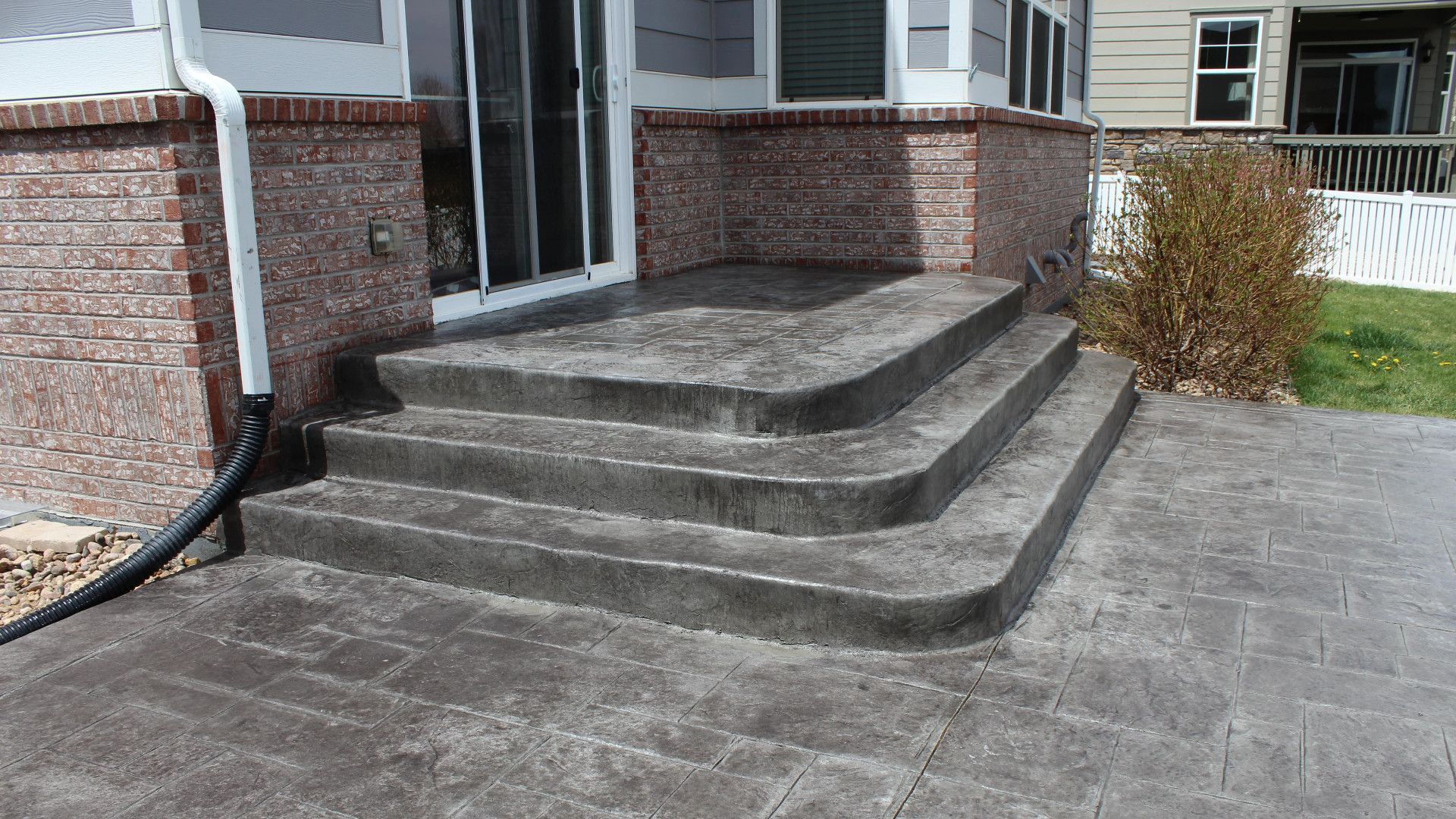
Many older single-family homes in Goffstown were built with plain poured-concrete or wooden entry steps that were functional at the time but offer no visual connection to surrounding walkways or patio surfaces. T & M Concrete installs stamped concrete steps that address both the structural and aesthetic gap, producing entry points that hold up under daily use while carrying the same texture and color language as adjacent outdoor surfaces. The result is an entrance that reads as intentional rather than assembled from mismatched materials.
The installation process begins with forming the step structure to the correct rise, run, and width for the specific entry point, whether that is a front door landing, a side entrance, or a transition down to a patio. Once the concrete is poured and begins to reach the right consistency, texture stamps are pressed into the surface to create patterns that mirror the surrounding hardscape. Color is introduced through integral pigment, broadcast hardener, or surface-applied stain depending on the finish target, and each method produces a different depth of tone. The sequence of timing between pour, stamp, and finishing coat is the variable that most separates a clean result from one where impressions are shallow or edges blur.
Arrange an on-site evaluation to review your existing entry conditions and discuss which patterns and finishes coordinate with your current or planned walkway surface.
How Stamped Steps Achieve a Coordinated Hardscape
Coordinating steps with adjacent surfaces is a sequencing and material decision, not just a visual one. The stamp pattern selected for the steps needs to align in scale with the pattern used on any adjoining walkway or patio, and the color application has to account for the fact that vertical riser faces and horizontal treads absorb pigment and sealant at different rates. T & M Concrete works through these decisions before installation begins so the finished steps read as continuous with the surrounding surface rather than as a separate project added later.
Once the sealant cures, you will notice that the surface has a consistent sheen across treads and risers, that the texture impression is sharp enough to provide grip without being rough underfoot, and that the color reads uniformly rather than blotching or fading toward the edges. Steps that are properly sealed also resist surface dusting, which is the fine powdering that happens on unsealed decorative concrete when foot traffic gradually abrades the top layer.
Custom texture options range from stone and slate patterns to brick-coursing layouts, and the choice affects not just appearance but also the grip profile of each tread. Bolder texture patterns create more surface relief, which adds traction but also requires more attention during the stamping window to keep impressions consistent. The finish decision is worth discussing in detail before work begins, since changing the pattern after the pour is not an option.
Common Questions About Stamped Concrete Step Installation
The questions below address how stamped concrete steps are actually built and finished, covering the process details that affect the quality and longevity of the installed surface.
- What determines the right stamp pattern for steps connected to an existing walkway? The scale of the stamp should match or complement the pattern already in place on the adjoining surface, and the grout line spacing in particular affects whether the two surfaces read as unified or mismatched. Bringing a photo or sample of the existing surface to the planning conversation helps T & M Concrete make that call accurately.
- How is color applied to stamped concrete steps, and how does it hold over time? Color is introduced through integral pigment mixed into the concrete, surface-applied color hardener broadcast before stamping, or a stain applied after the surface cures, and each method produces a different depth of tone. A penetrating or film-forming sealant applied after curing locks the color and is the primary factor in how well it holds under foot traffic.
- What happens to the surface texture if the concrete is stamped too early or too late in the curing window? Stamping too early causes the impression to collapse and lose definition, while stamping too late produces shallow marks that do not carry through to a finished look. The timing window varies based on the concrete mix and site conditions, and an experienced installer reads the surface consistency rather than relying on a fixed clock.
- Why do the risers and treads sometimes look different in color even when the same pigment is used? Vertical riser faces and horizontal tread surfaces cure at different rates and receive different amounts of sealant during application, which causes them to absorb and reflect light differently. Applying sealant in two thin coats rather than one heavy coat is the standard way to reduce that variation in Goffstown homes where entries face varying sun exposure throughout the day.
- What maintenance does a stamped concrete step surface need after installation? Resealing every two to three years is the primary maintenance task, since sealant is what protects the color and surface texture from abrasion and surface dusting. Using a pH-neutral cleaner rather than acidic or bleach-based products during routine cleaning prevents the sealant from breaking down prematurely between resealing cycles.
T & M Concrete handles stamped concrete step projects across Goffstown, and a site visit is the most reliable way to confirm forming requirements, pattern options, and how the steps will connect to your existing outdoor surfaces. Contact T & M Concrete to schedule a walkthrough of your entry area and start narrowing down the finish that fits your property.