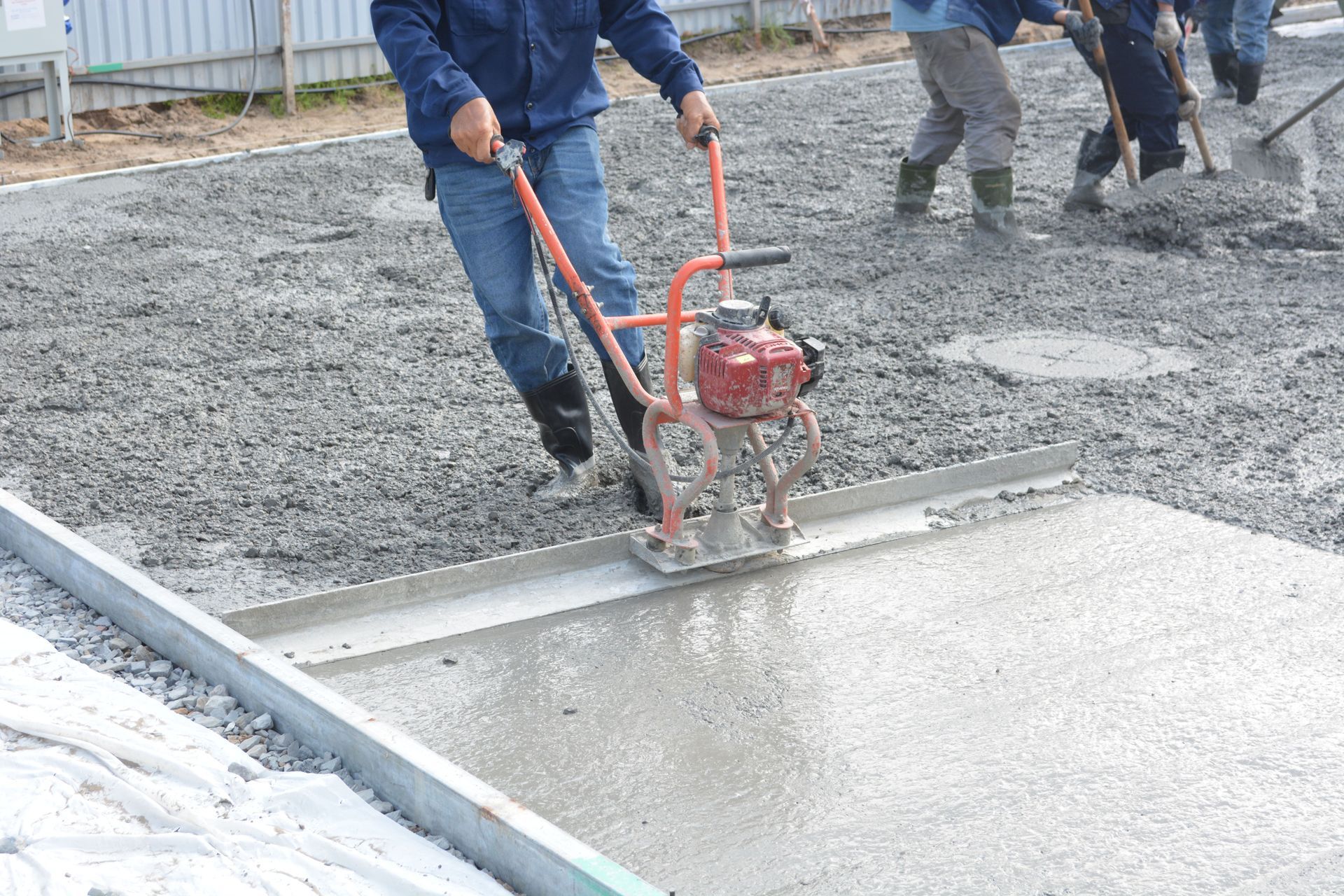
Concrete Slab Installation
Slabs Built for Structures That Need Solid Ground
Concrete Slab Installation in Goffstown for garages, sheds, and workshops that require stable, level foundations
Much of Goffstown's residential development includes detached garages, backyard workshops, and outbuildings added after the original home was built—structures that often sit on inadequate bases or compacted earth that shifts and settles unevenly over time. T & M Concrete handles concrete slab installation for exactly these situations, providing properly prepared, level foundations for residential and commercial structures throughout the area. When an existing base is no longer holding level or a new structure needs to go up on solid footing, the difference between a poured slab done correctly and one done quickly becomes visible within a few years.
Every slab installation begins with site preparation—clearing the area, grading for level, and compacting the sub-base before any concrete is placed. Skipping or rushing this stage is the most common reason slabs develop low spots, cracking along stress lines, or soft areas that deflect under load. T & M Concrete addresses both the surface requirements and what lies beneath it, which determines how the finished slab performs under the weight and daily activity of whatever structure it supports.
Schedule a site evaluation to discuss the specific foundation requirements for your garage, shed, or outdoor structure.
What Proper Concrete Slab Work Requires
A slab that holds up under real use—whether that is vehicle traffic in a garage, heavy equipment in a workshop, or static load from a shed—depends on more than the concrete mix itself. Sub-base depth, compaction method, and formwork alignment all determine whether the finished surface stays flat and intact. For commercial applications, load-bearing requirements may also affect thickness specifications and reinforcement decisions made before the pour begins.
Once the slab is poured and finished, you will notice a surface that is uniformly level without low spots that collect standing water, and edges that are clean and square to the structure being built on top of it. A properly finished slab also cures without surface scaling or honeycombing—visible signs that mixing, placement, or finishing was handled inconsistently.
Slab thickness and reinforcement vary based on what the structure demands. A slab supporting a two-car garage requires different specifications than one under a storage shed, and that decision gets made at the planning stage rather than adjusted after the pour. Understanding those distinctions before work begins keeps the finished foundation matched to its actual purpose.